Refrigerant Problems
A heat pump refrigerant leak starts slowly. First the system runs longer. Then the air feels weaker, frost builds where it should not, and the bill creeps up. Refrigerant does not get used up, so a low charge always means a leak somewhere. If you suspect one in your Parker home, call and we connect you with an independent local contractor.
Call (303) 647‑3227 →Related Pages
Where Leaks Start
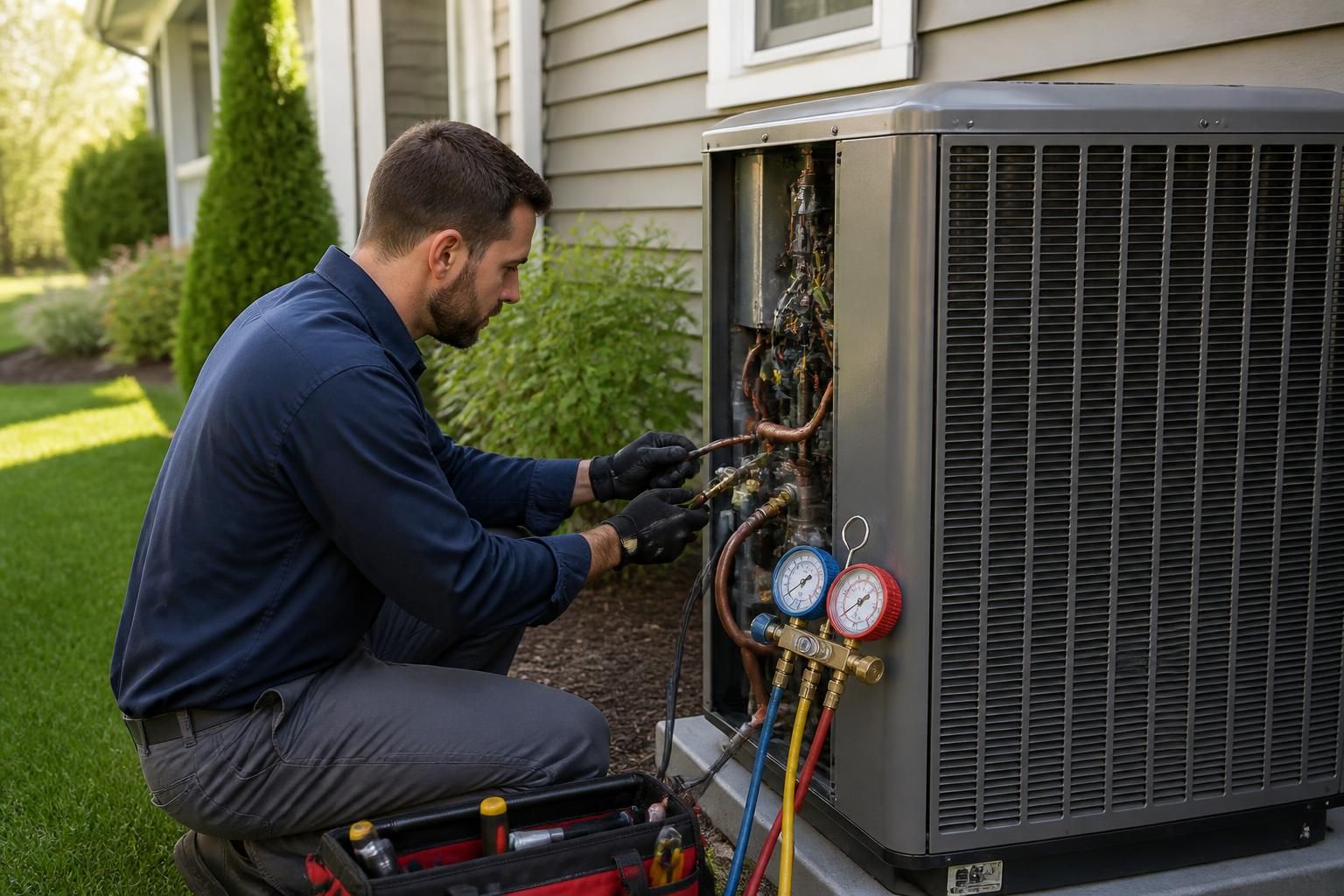
Refrigerant travels through copper and aluminum tubing, brazed joints, valves and coils. Any of those can open up over time. These four leak sources come up again and again in heat pumps and mini splits, and they sit near the top of the problem list.
✓
Corrosion in the indoor coil. Tiny pinholes, often called formicary corrosion, form in copper coils over the years. They leak slowly and are hard to find without proper tools.
✓
Vibration rub-through. Tubing that touches the cabinet or another line can wear through as the unit vibrates season after season.
✓
Flare fittings and service valves. Mini split flare connections and the service ports on any system can loosen or crack, especially where freeze-thaw cycles work on them.
✓
Physical damage to the outdoor coil. Hail, a stray mower or a shovel can puncture fins and tubing on the outdoor unit.
Leaks in Parker
In a Parker winter a heat pump is already working with thin, cold air. Take away some refrigerant and it falls behind fast, leaning on backup heat for hours. Big temperature swings and hailstorms also stress fittings and coils. Older systems may still use R-22, which has not been produced in the United States after 2019, so recharging them gets harder each year.
Do not buy a recharge kit or try to add refrigerant yourself. Federal EPA rules limit who can handle refrigerant, and adding it without finding the leak just loses it again. Do not touch an iced line with bare hands. If you smell a sweet or chemical odor indoors, open windows and keep people and pets out of that room.
A leak becomes urgent when heating or cooling fails, when ice builds on the coil, or when the compressor starts running hot and loud. Running the system low on charge can ruin the compressor, which is covered on our compressor page.
Call (303) 647‑3227 →
What You Can Do
01
From a step away, look at the copper lines at the outdoor unit for ice, oily spots or frost on the smaller line. Note what you see.
02
A steady hiss or bubbling sound near the indoor or outdoor coil while the system runs can point to a leak.
03
Replace a dirty filter first. Poor airflow can mimic low charge symptoms, so this helps the contractor narrow it down.
Service Areas
Leak calls come from older Parker homes with original R-22 systems as well as newer homes with mini splits. The line also takes calls from Littleton, Englewood and Castle Rock and sends each one to an independent local contractor.
FAQ
Start Here
The longer it runs low, the harder it works. Call the line and your call goes to an independent local contractor who handles refrigerant leaks in Parker. Call (303) 647-3227.
Call (303) 647‑3227 →