Defrost Problems
The heat pump defrost cycle is what keeps your outdoor unit working through a Parker winter. A few times an hour in cold, damp weather the system pauses heating, melts the frost on the outdoor coil and starts again. When that routine breaks, ice builds or the house loses heat. If the cycle looks wrong, call and we connect you with an independent local contractor.
Call (303) 647‑3227 →Related Pages
What Fails
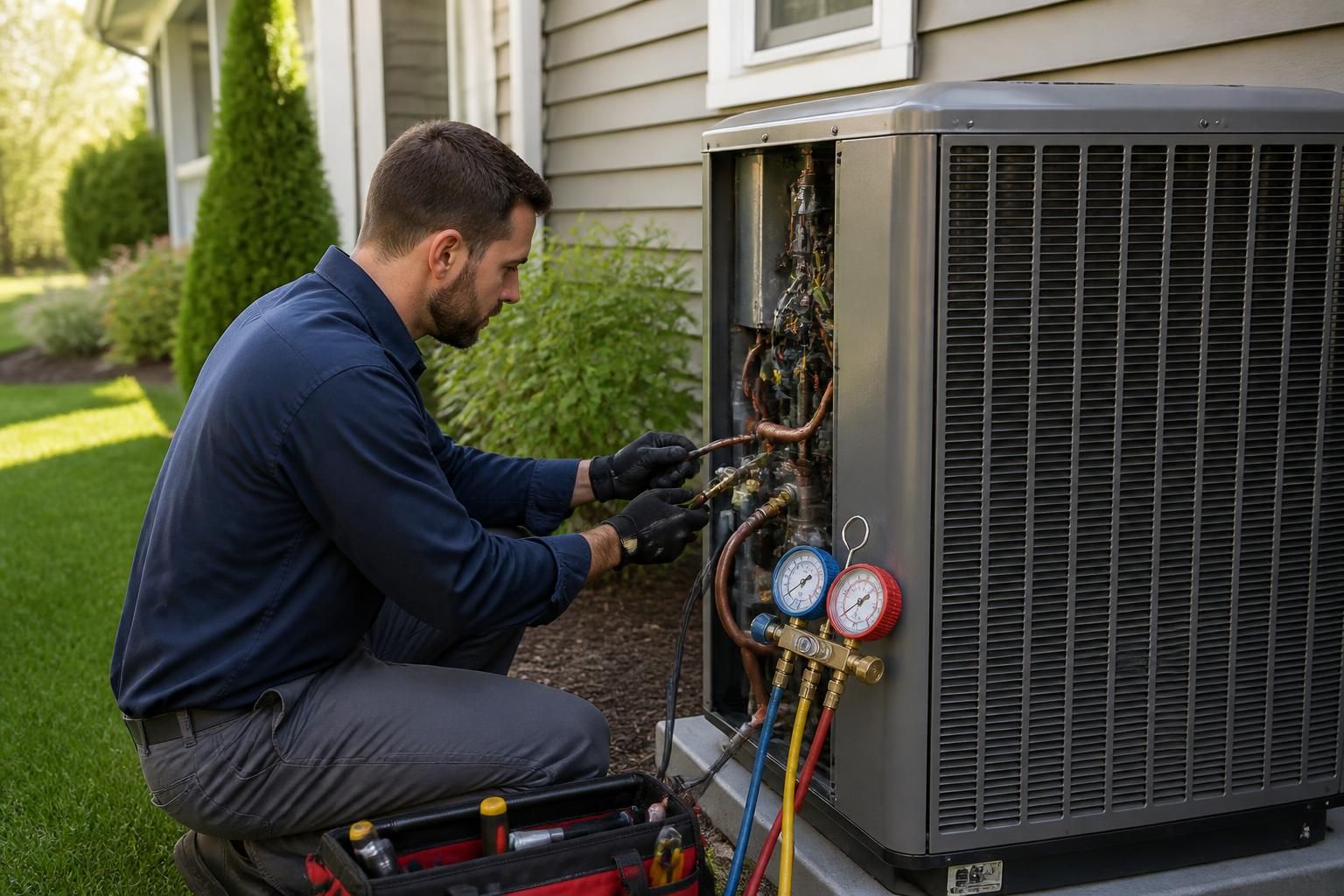
During defrost the reversing valve shifts the system into cooling, the outdoor fan stops, and hot refrigerant melts frost off the outdoor coil. Backup heat may come on indoors. Several parts must work together for that, and any one of these four common faults can break the routine.
✓
The defrost control board. The board times defrost and decides when to start and stop it. A failed board can skip defrost entirely or leave the unit stuck in it.
✓
The coil temperature sensor. A small sensor on the outdoor coil tells the board when frost is likely. If it reads wrong, defrost starts too often, too rarely or ends early.
✓
The reversing valve or its solenoid. Defrost depends on the valve shifting into cooling. If the solenoid coil fails or the valve sticks, the unit cannot melt its own frost.
✓
Low refrigerant charge. A short charge drops coil temperature, so frost forms faster and defrost cannot keep up even when the controls work.
Parker Defrost
Defrost frequency depends on humidity and temperature more than on cold alone. Parker air is usually dry, but snowmelt and freezing fog days load the coil with moisture. On those days you may see defrost every thirty to ninety minutes, depending on how the board is set. Thin air at altitude lets frost form a little more readily on the coil.
Do not shut the system off in the middle of a defrost to stop the noise or the steam. That can leave half melted ice to refreeze. Do not adjust anything on the defrost board or jumper pins inside the panel; that is contractor work. And do not mistake the steam cloud for smoke. Steam rises and fades quickly without any burning smell.
Call soon if the unit stays in defrost for more than about fifteen minutes, if it never defrosts while ice builds, or if each cycle leaves ice behind. Those patterns lead to a frozen coil and higher bills from extra backup heat.
Call (303) 647‑3227 →
Watch It Work
01
From a window or the yard, watch the outdoor fan stop, steam rise, and the fan restart a few minutes later. Note how long it takes.
02
Jot down the time of each defrost for a few hours. Defrost every few minutes, or none at all with ice building, is useful for the contractor.
03
Shovel snow away from the base so meltwater drains off instead of refreezing under the coil after each cycle.
Service Areas
Defrost questions come from all over Parker, including homes near Cherry Creek where cold air settles on still nights. The line also takes calls from Lone Tree, Greenwood Village and Englewood and passes each one to an independent local contractor.
FAQ
Start Here
Note how long and how often it happens, then make the call. Your call goes to an independent local contractor who works on heat pump defrost controls in Parker. Call (303) 647-3227.
Call (303) 647‑3227 →