Winter Problems
Finding your heat pump frozen over on a January morning is common in Parker. A thin white frost on the outdoor coil is normal in winter, and the defrost cycle should clear it. Thick ice that covers the coil, the top or the fan is a different story. If the ice keeps building, call and we connect you with an independent local contractor.
Call (303) 647‑3227 →Related Pages
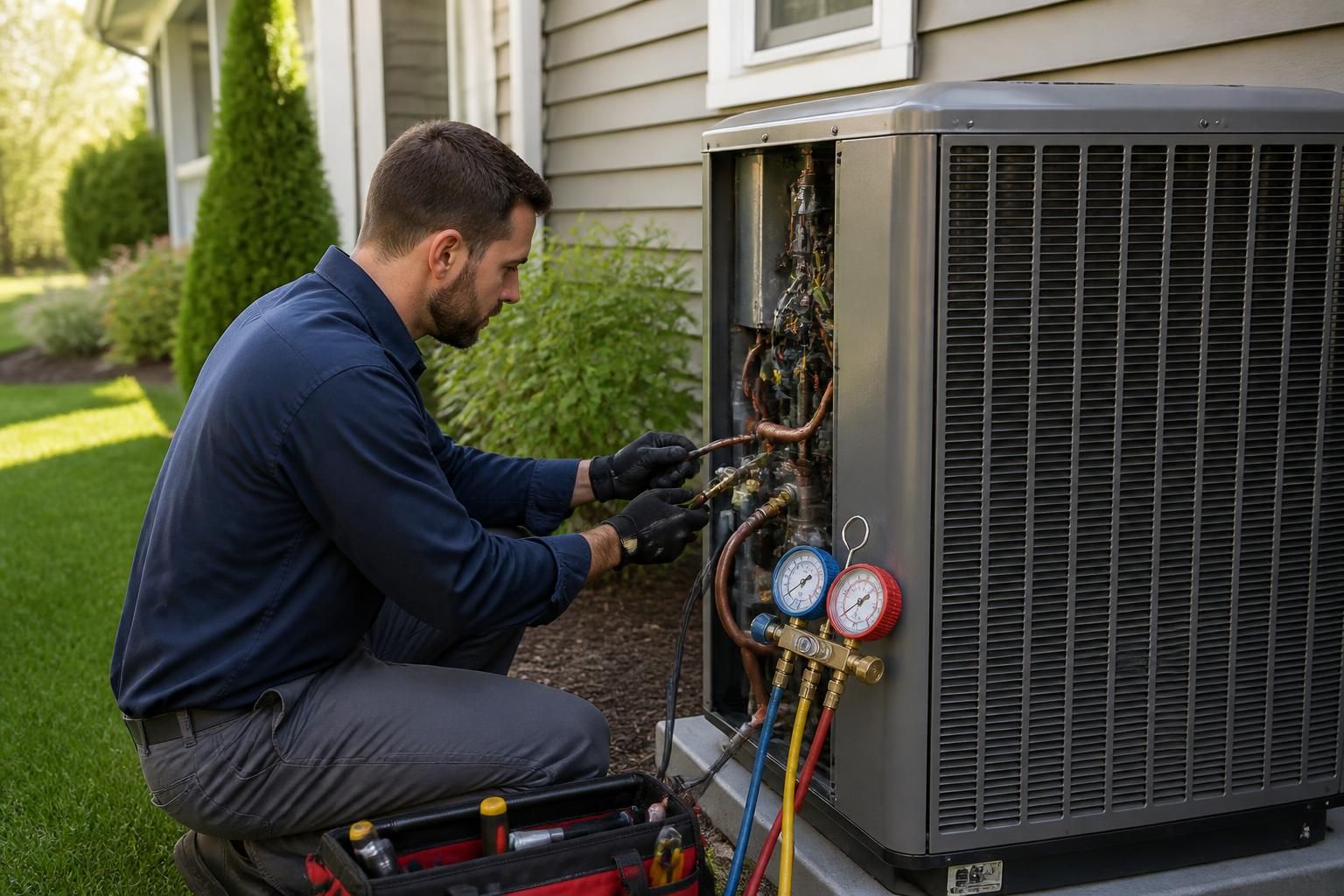
Ice Causes
In heating mode the outdoor coil runs colder than the air around it, so moisture freezes onto it. Defrost melts that frost every so often. When the coil cannot shed ice, the cause is usually one of these four heat pump problems.
✓
A failed defrost control or sensor. The defrost board and the coil temperature sensor decide when to melt the ice. If either fails, frost keeps building with no defrost to clear it.
✓
Low refrigerant. A low charge makes the coil run far colder than designed, so ice forms faster than defrost can remove it.
✓
An outdoor fan that will not run. A bad fan motor or capacitor leaves the coil with no airflow. Ice builds quickly, often in an uneven pattern.
✓
Water dripping onto the unit. A leaky gutter or roof edge above the outdoor unit drips meltwater that refreezes on top, and snow piled around the base blocks drainage.
Ice at Altitude
Parker gets dry cold, but freeze-thaw days are common, and melting snow on a sunny afternoon refreezes after dark. That moisture loads up outdoor coils. At altitude the coil also moves less air, so it runs colder in heating mode. A healthy unit copes with this through regular defrost. A unit that falls behind ices up quickly.
Never chip ice off with a tool, and never pour hot water on the coil. Both can puncture the thin tubing or bend fins, which turns an ice problem into a refrigerant leak. Do not run the system for days with a block of ice on it; the compressor can be damaged by liquid refrigerant returning to it.
If the coil is encased in ice, set the thermostat to Emergency Heat so the outdoor unit rests, then call. That is urgent when the house depends on the heat pump. Summer freezing of the indoor coil is a separate problem, covered on our not cooling page.
Call (303) 647‑3227 →
Safe Steps
01
If the coil is solid ice, set the thermostat to Emergency Heat. The outdoor unit stops and backup heat keeps the house warm while ice melts.
02
Brush loose snow off the top and shovel it away from the base so meltwater can drain. Leave the ice itself alone.
03
Check for a gutter, downspout or roof edge dripping onto the cabinet. Mention it when you call so the contractor can plan for it.
Service Areas
Icing calls come in from across Parker, especially homes with outdoor units tucked under roof eaves or on the shady north side of the house. The line also covers Castle Rock, Elizabeth, Sedalia and Larkspur, where winter nights run colder still.
FAQ
Start Here
Switch to Emergency Heat, leave the ice alone and pick up the phone. We connect you with an independent local contractor who handles icing problems in Parker. Call (303) 647-3227.
Call (303) 647‑3227 →