Parker, CO Heat Pump Service
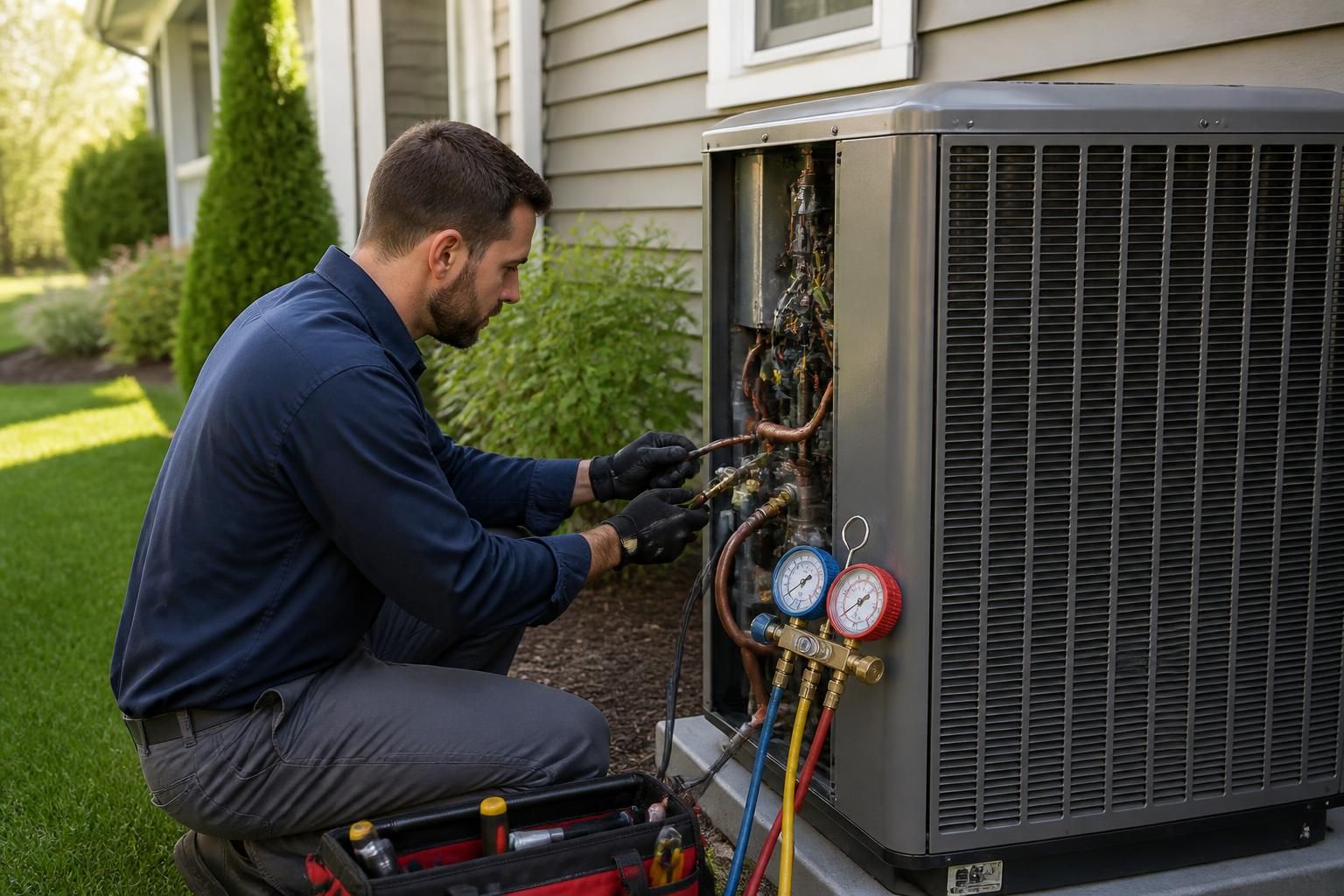
Air source heat pump repair covers the most common setup in Parker: an outdoor unit that pulls heat from the outside air and an indoor air handler that moves it through your ducts. If the system blows cool air, runs nonstop, ices over, or leans on its backup heat, call and a local technician who handles these systems can track down the cause.
Call (303) 647‑3227 →Related Help
Common Faults
An air source heat pump moves heat in both directions. In winter it pulls heat out of cold outdoor air, and in summer it reverses and sends indoor heat outside. That flexibility depends on several parts that work hard in this climate, and most air source heat pump repair comes down to the four below.
✓
Defrost controls. A failed defrost board or coil sensor lets ice build until the outdoor coil is a solid block. Heat output drops and the backup heat strips end up carrying the load.
✓
Reversing valve. This valve switches the system between heating and cooling. When it sticks, the system may cool in winter or heat in summer. See reversing valve problems.
✓
Capacitor and contactor. These electrical parts start the compressor and outdoor fan. Summer heat and storm-season power blips wear them out, and a failed one leaves the outdoor unit humming or silent.
✓
Refrigerant leaks. A slow leak drains capacity a little at a time. The system runs longer, frosts up unevenly, and eventually cannot keep the house warm on cold nights.
Altitude and Backup Heat
Parker sits at about 5,900 feet, and the thinner air holds less heat in each cubic foot. The outdoor coil has to move more air to collect the same heat it would at sea level, so capacity runs below the brochure numbers. Defrost matters more too, because the coil spends long stretches near freezing.
Most ducted air source systems have electric heat strips in the air handler as backup. When the heat pump falls behind, the strips switch on. That keeps the house warm but uses far more electricity. A system that leans on its strips all winter is often hiding a heat pump fault behind a comfortable house.
If your thermostat shows aux or emergency heat often, or your Xcel Energy bill jumped without a cold spell to explain it, mention that when you call for air source heat pump repair. It tells the technician to check whether the heat pump side is doing its share. The page on high electric bills explains more.
Call (303) 647‑3227 →
Safe Checks
01
Make sure it is set to heat, not emergency heat, and the setpoint is a few degrees above room temperature. Swap the batteries if the screen looks faint.
02
A clogged filter at the air handler starves the indoor coil of airflow. Put in a clean filter of the same size and see whether airflow improves.
03
In cold, damp weather the outdoor unit should steam and clear its frost every so often. If ice keeps building and never clears, turn the system off and call.
Checks did not fix it? Talk to a local heat pump technician.
Call (303) 647‑3227 →Service Areas
We hear from homeowners in Parker, Stonegate, Cottonwood and nearby towns like Lone Tree, Centennial and Aurora. Most houses in these subdivisions were built with ducts, which makes a ducted air source system the most likely setup in your home.
FAQ
Get Connected
Before air source heat pump repair, note what the thermostat shows and what the outdoor unit is doing. A local technician who works on ducted heat pumps in Parker can take a look. Call (303) 647-3227.
Call (303) 647‑3227 →